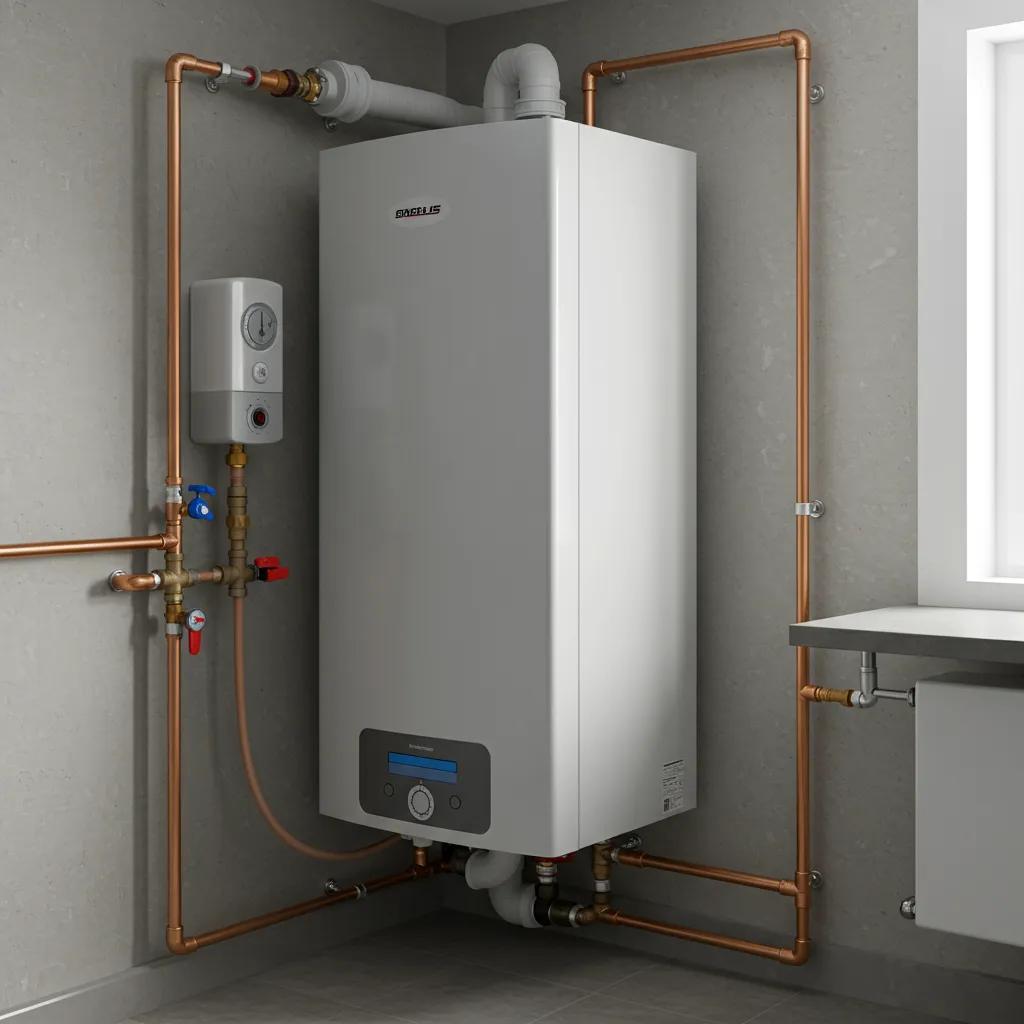
Upgrade your home with a tankless water heater and say goodbye to energy waste, hello to an endless supply of hot water, and reclaim precious utility space. Plus, with the right filtration, you can keep your system running at its best, even in Tulsa’s hard-water conditions. This guide will show you: By the end of this, you’ll be ready to make an informed decision about an energy-efficient upgrade that safeguards your investment and delivers reliable, space-saving hot water without any unpleasant surprises. What Makes Tankless Water Heaters So Energy Efficient? Tankless water heaters are designed to heat water only when you need it, meaning no more wasted energy keeping a large tank hot. This smart approach can boost your energy efficiency by up to 30% compared to traditional storage tanks. Their on-demand heating elements kick in precisely when you turn on a faucet, reducing wasted fuel or electricity and leading to lower utility bills all year round in Tulsa. Understanding these efficiency gains makes it clear why tankless models are a smart choice for both your wallet and the environment. Tankless Water Heater Energy Efficiency Explained Tankless water heaters significantly cut down on energy use compared to older tank models. They only heat water when you actually need it, eliminating the energy lost from keeping a tank of water hot all the time. This on-demand heating can lead to substantial savings on your energy bills. U.S. Department of Energy This information supports the article’s points about the energy-saving benefits of tankless water heaters. How Do Tankless Water Heaters Outperform Traditional Models in Energy Savings? Tankless water heaters save energy by only activating when hot water is being used. Traditional tanks, on the other hand, constantly heat and reheat a large volume of water, 24/7. This means tankless units eliminate “standby heat loss”—the energy wasted keeping stored water warm. Over the course of a year, homeowners can see: These savings translate directly into lower operating costs and a smaller carbon footprint, making them a financially sound and environmentally conscious choice. What Kind of Savings Can You Expect on Utility Bills with Tankless Systems? When you swap out an old tank water heater for a tankless system, you can typically expect to save between $44 and $100 annually on your utility bills, depending on your energy source and how much hot water you use. Natural gas models usually offer greater savings than electric ones, and in a typical Tulsa household, the system can pay for itself in 5 to 10 years. To estimate your specific savings, consider comparing: Model Type UEF Rating Estimated Annual Savings Gas Tankless 0.82–0.98 $75–$100 Electric Tankless 0.95–0.99 $44–$60 Standard Gas Tank 0.58–0.70 Baseline Standard Electric Tank 0.90–0.94 Baseline These figures clearly show how improved efficiency directly leads to lower energy costs, making the switch a smart financial move. How Do Energy Star Certifications and Rebates Impact Tankless Water Heater Savings? Choosing an Energy Star–certified tankless unit means you’re getting a product that meets strict efficiency and performance standards. These units often qualify for federal tax credits and local utility rebates, which can cover 10–30% of the purchase price. In Tulsa, you might find rebate programs from local utilities or state incentives that can knock several hundred dollars off the initial cost, helping you see a return on your investment much faster and boosting your long-term savings. How Do Tankless Water Heaters Deliver Endless Hot Water? A tankless water heater provides a continuous flow of hot water by instantly heating the cold water that passes through its high-efficiency heat exchanger as soon as you turn on a faucet. With precise temperature controls and powerful heating elements, it maintains your desired temperature without needing to store a large volume of water. This means you get an uninterrupted supply of hot water, eliminating the dreaded “cold shower” when the tank runs out—perfect for busy Tulsa households with multiple hot water demands. What’s the Science Behind Instant Hot Water? The magic of instant hot water comes from a specially designed heat exchanger, usually a coil, through which incoming water flows. When water moves through it, the unit’s burners ignite or electric elements activate, rapidly heating the water to your set temperature. Smart sensors monitor the water flow and temperature, allowing the system to adjust its power output in real-time to ensure a consistent hot water temperature, no matter how many taps are running. How Do You Choose the Right Size Tankless Water Heater for Your Home? To get the best performance, you need to match the unit’s gallons-per-minute (GPM) capacity to your home’s peak hot water usage. Figure out the total GPM needed when multiple fixtures are running simultaneously (e.g., two showers at 2.5 GPM each plus a dishwasher at 1.5 GPM equals 6.5 GPM). Then, select a tankless unit that can meet or exceed that GPM requirement, considering Tulsa’s average groundwater temperature (around 56 °F). Proper sizing ensures you’ll always have enough hot water without any temperature drops. What Are the Benefits for Busy Households and Multiple Fixture Use? Families with high hot water demands will love the capacity of tankless heaters to supply multiple fixtures at once—think showers, sinks, and appliances—without running out. Advanced models with condensing heat exchangers can handle high flow rates (up to 7.5–8 GPM) and recover quickly, ensuring everyone gets consistent hot water during busy mornings or weekend routines. Why Is Space Saving a Major Plus for Tankless Water Heaters? Tankless water heaters ditch the bulky tanks, mounting compactly on walls or even outdoors, freeing up to 15 square feet of valuable floor space. Their small footprint means they can be installed in closets, utility rooms, or on exterior walls, giving you more room for storage, laundry appliances, or a home workshop. For Tulsa homes and apartments where space is at a premium, this design flexibility is a game-changer, maximizing your usable square footage and simplifying renovation projects. How Does the Compact, Wall-Mounted Design Give You More Space? Mounted at a convenient height, tankless