
How to Fix a Loud Sump Pump That Keeps Short-Cycling
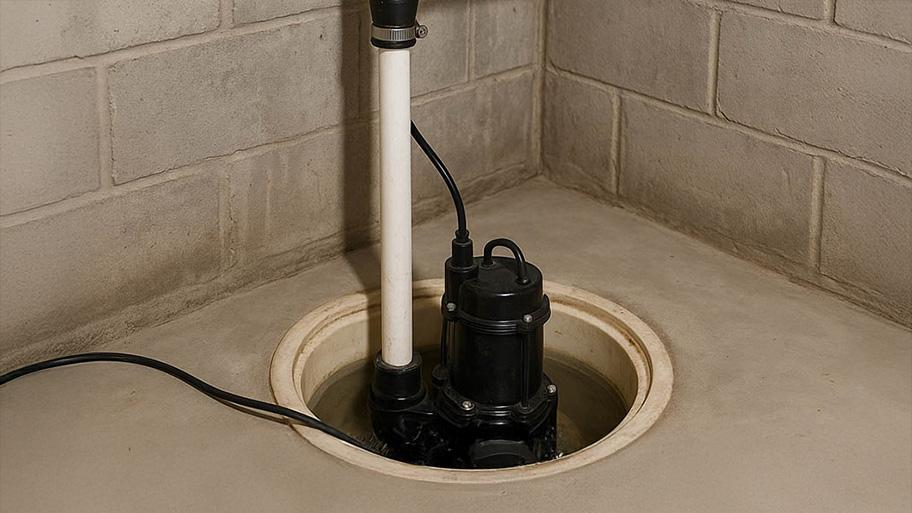
An existing sump pump can move water and still leave a homeowner frustrated. Here’s how Green Country Plumbing approaches a noisy, unreliable system with a smarter installation, electronic water level sensors, and backup protection.
A loud sump pump can turn an otherwise quiet home into a constant reminder that something isn’t working properly. Add frequent cycling, a cramped sump pit, and concerns about whether the pump will activate when needed, and the frustration becomes understandable.
Recently, a Green Country Plumbing customer brought us a problem that required more than a simple adjustment. His existing sump pump was too loud, and its operation wasn’t meeting his expectations. He wanted a quieter, more dependable solution that could provide better protection against unwanted water.
Our recommendation was to install a new heavy-duty cast-iron sump pump with electronic water level sensors, improve the discharge configuration, and retain the existing pump as a secondary backup.
The proposed installation also includes mobile monitoring capabilities, giving the homeowner another way to stay informed about abnormal water levels.
Identify Why a Sump Pump Becomes Loud
Sump pumps aren’t silent, but excessive noise deserves attention. A properly operating pump will typically produce some motor noise and the sound of moving water. Loud vibrations, repeated clicking, rattling pipes, or frequent starts can indicate problems with the installation or operating conditions.
Several factors can contribute to excessive sump pump noise:
- Motor vibration: Pump vibrations can transfer through the basin, piping, and surrounding structure.
- Rapid short-cycling: The pump starts and stops repeatedly, creating unnecessary noise and mechanical wear.
- Discharge piping: Poorly supported piping or abrupt water flow can create additional noise.
- Check valve operation: A closing check valve can produce a noticeable thump or banging sound.
- Restricted sump pit space: A mechanical float switch may contact the basin wall or other equipment, preventing normal movement.
In this customer’s situation, the limited space inside the sump pit was an important consideration. Traditional mechanical float switches require sufficient clearance to move freely.
A float switch that becomes obstructed may prevent the pump from starting or stopping at the appropriate water level.
That creates a reliability concern, especially during periods of heavy rainfall when the system may need to operate frequently.
Understand Why Sump Pump Short-Cycling Matters
Short-cycling occurs when a sump pump starts and stops more frequently than intended. Rather than completing an appropriate pumping cycle, the system repeatedly activates over short intervals.
Every motor startup introduces electrical and mechanical demands. Excessive cycling can contribute to premature component wear, increase noise, and shorten the pump’s service life.
Several conditions can cause short-cycling, including an improperly adjusted activation level, a small effective pumping volume, water returning through the discharge line, or a pump that moves water faster than the basin can accommodate.
A failed or missing check valve can also allow discharged water to flow backward into the sump pit, triggering another pumping cycle.
For this installation, Green Country Plumbing plans to configure the new pump’s electronic controls to reduce unnecessary cycling. The goal is to establish more appropriate activation and shutoff levels for the existing pit and its incoming water volume.
Proper pump sizing and control settings remain essential. Electronic sensors can improve switching reliability, but they cannot independently correct every cause of short-cycling.
Choose a Heavy-Duty Cast-Iron Sump Pump
Everbilt 1/2 HP Cast Iron Submersible Sump Pump HDS50 – The Home Depot
Basement Waterproofing Mississauga | $3,400 Rebate | 25-Year Warranty
Sump/Ejector Pump Repair/Replacement — Aspen Plumbing Services
7
For this homeowner, we’re recommending a heavy-duty cast-iron sump pump.
Cast-iron construction offers several advantages for demanding residential applications. Its weight can help provide a stable installation, while its durability makes it well suited for repeated pumping cycles.
However, cast iron alone doesn’t guarantee quiet operation. Proper installation, pump selection, vibration control, and discharge piping all contribute to how much noise the homeowner hears.
Our approach considers the complete system rather than focusing exclusively on the pump motor.
Why does pump construction matter?
Sump pumps operate in an environment where moisture, sediment, and frequent motor starts can create demanding conditions. Selecting a durable pump with appropriate capacity and reliable controls helps reduce the likelihood of premature equipment problems.
A quality pump should also be matched to the required vertical lift, discharge pipe dimensions, and anticipated groundwater volume.
An oversized pump can contribute to frequent cycling in a small basin, making proper equipment selection especially important.
Prevent Stuck Switches With Electronic Sensors
One of the most important improvements in this proposed installation is the use of electronic water level sensors.
Traditional mechanical float switches depend on physical movement. As water rises, the float moves upward until it activates the pump. When the water falls, the switch returns to its off position.
That arrangement works well in appropriately sized basins. Tight installations, however, can create clearance problems.
Electronic sensors detect water levels without requiring the same mechanical float movement. This can be particularly useful when the existing sump pit has limited space.
For our customer’s new installation, electronic sensors will help address concerns about the switch becoming stuck against the pit wall.
The control system will also be configured to establish appropriate pumping cycles, reducing repeated starts and stops.
Electronic controls still require proper installation, maintenance, and testing. Sensor contamination, wiring problems, or controller failures can affect operation, so no control system should be considered completely maintenance-free.
Add Mobile Alerts for Better Water Monitoring
Imagine leaving home during a heavy rainstorm and wondering whether the sump pump is keeping up.
That’s where connected monitoring can provide a meaningful advantage.
The proposed pump system will support mobile app integration, allowing the homeowner to receive notifications when abnormal water levels are detected.
Depending on the equipment and configuration, connected monitoring may provide:
- High-water notifications when the sump pit reaches a predetermined level.
- System status information through a compatible mobile application.
- Alerts that help homeowners respond to potential drainage problems sooner.
Mobile alerts depend on the specific controller, internet connectivity, notification settings, and any applicable service requirements.
Although monitoring cannot prevent flooding by itself, timely notification may allow a homeowner to address a developing problem before water damage becomes extensive.
Connect the Discharge to Existing Gutter Drains
Removing water from the sump pit is only part of the job. That water also needs an appropriate destination.
For this customer, our proposed installation includes connecting the new sump pump discharge piping to the existing exterior gutter drainage system.
This approach is intended to direct collected groundwater away from the home’s foundation using the property’s existing drainage infrastructure.
Before completing the connection, the drainage system must be evaluated for sufficient capacity, appropriate flow direction, and a suitable discharge location. Shared drainage piping can become overwhelmed when heavy roof runoff and sump pump discharge occur simultaneously.
We will also consider backflow protection and check valve placement to prevent discharged water from returning to the pit.
Local drainage requirements matter. Connections to storm drainage systems may require approval, and sump pump discharge should not be routed into a sanitary sewer where prohibited.
The Michigan Department of Environment, Great Lakes, and Energy provides an informative overview of residential sump pump discharge considerations. Local Oklahoma requirements must still be verified separately. Michigan+1
Keep the Existing Pump for Backup Protection
Replacing an existing sump pump doesn’t always mean the original equipment needs to be discarded.
In this installation, we plan to incorporate the homeowner’s current pump as a secondary backup.
The new cast-iron pump will serve as the primary water removal system. The existing pump will be configured to provide supplemental pumping capacity when the water level rises beyond the primary pump’s normal operating range.
This arrangement adds another layer of protection, provided the original pump remains operational and the basin, electrical supply, and discharge system can support both pumps.
One important distinction: a secondary electric pump is not automatically a power-outage backup. Without a separate battery or generator power source, both pumps may become unavailable during an electrical outage.
The existing pump will also need to be evaluated before being relied upon for backup service, particularly because its current performance has been a source of concern.
Test the New Sump Pump Installation
After installation, proper testing is essential.
Our technicians will verify that the new pump activates and shuts off at the intended water levels. We’ll also check the discharge piping for leaks, confirm appropriate water flow, and evaluate operation for excessive vibration or unnecessary cycling.
The secondary pump will be tested independently to verify that it activates at its designated backup level.
Finally, we’ll review the electronic controls and available mobile monitoring features with the homeowner.
These checks help establish that the system is operating as designed before the installation is considered complete.
Answer Common Sump Pump Questions
| Frequently asked question | Answer |
|---|---|
| Why is my sump pump so loud? | Excessive noise can result from motor vibration, loose piping, check valve operation, or frequent starts. A professional inspection can identify the contributing factors. |
| How often should a sump pump run? | Operating frequency depends on groundwater conditions, rainfall, basin size, and pump capacity. Frequent operation during heavy rain can be normal, but rapid starts and stops deserve attention. |
| Can a sump pump be too powerful? | Yes. A pump with excessive capacity for its basin can remove water too quickly and contribute to short-cycling. |
| Are electronic sump pump sensors better than float switches? | Electronic sensors can offer advantages in tight spaces because they eliminate certain mechanical clearance problems. Proper installation and maintenance remain important. |
| Will a cast-iron sump pump be quieter? | Cast-iron construction may help reduce some vibration, but actual noise depends on the pump, piping, check valves, and installation conditions. |
| Can I receive sump pump alerts on my phone? | Yes. Compatible monitoring systems can notify homeowners of abnormal water levels or certain system conditions through a mobile app. |
| Can two sump pumps share one pit? | Yes, when the basin has adequate room, the pumps have appropriate controls, and the discharge arrangement can handle their combined flow. |
| Will a backup sump pump work during a power outage? | Only when it has an appropriate independent power source, such as a battery backup or generator. |
| Can sump pump water connect to gutter drains? | Sometimes. The drainage system must have adequate capacity, a suitable discharge location, and comply with applicable local requirements. |
Learn More From Trusted Pump Manufacturers
Homeowners interested in understanding sump pump operation can explore these additional resources.
- Zoeller Pump Company, Product Support: Explains short-cycling, check valve noise, and common sump pump operating problems. Zoeller specifically identifies basin diameter and pump activation range as factors affecting short-cycling. Frequently Asked Questions
- Pentair, Sump Pump Troubleshooting: Covers malfunctioning float switches, clogged pumps, air locks, and other conditions that can affect pumping performance. Pentair
- Zoeller, Backup Pump Testing and Operation: Provides manufacturer guidance on testing primary and backup pumps, water level controls, and alarm operation. Zoeller Pump Company
Protect Your Home With a Better Sump Pump System
A sump pump should provide confidence that unwanted water is being managed effectively. Excessive noise, unreliable switching, and repeated short-cycling can undermine that confidence.
For this Green Country Plumbing customer, our proposed solution addresses several concerns together: a durable cast-iron pump, electronic water level controls, improved discharge routing, mobile monitoring capabilities, and a secondary pump for added protection.
The installation is designed to deliver quieter, more consistent operation while helping reduce unnecessary motor wear.
Every property has different drainage conditions. Evaluating the entire system allows us to recommend equipment and configurations suited to the homeowner’s actual needs.
Concerned about a noisy or unreliable sump pump?
Green Country Plumbing helps homeowners throughout the Tulsa area evaluate sump pump problems, improve drainage performance, and install dependable water removal systems.
Call 918-241-3605 to schedule a plumbing evaluation.